
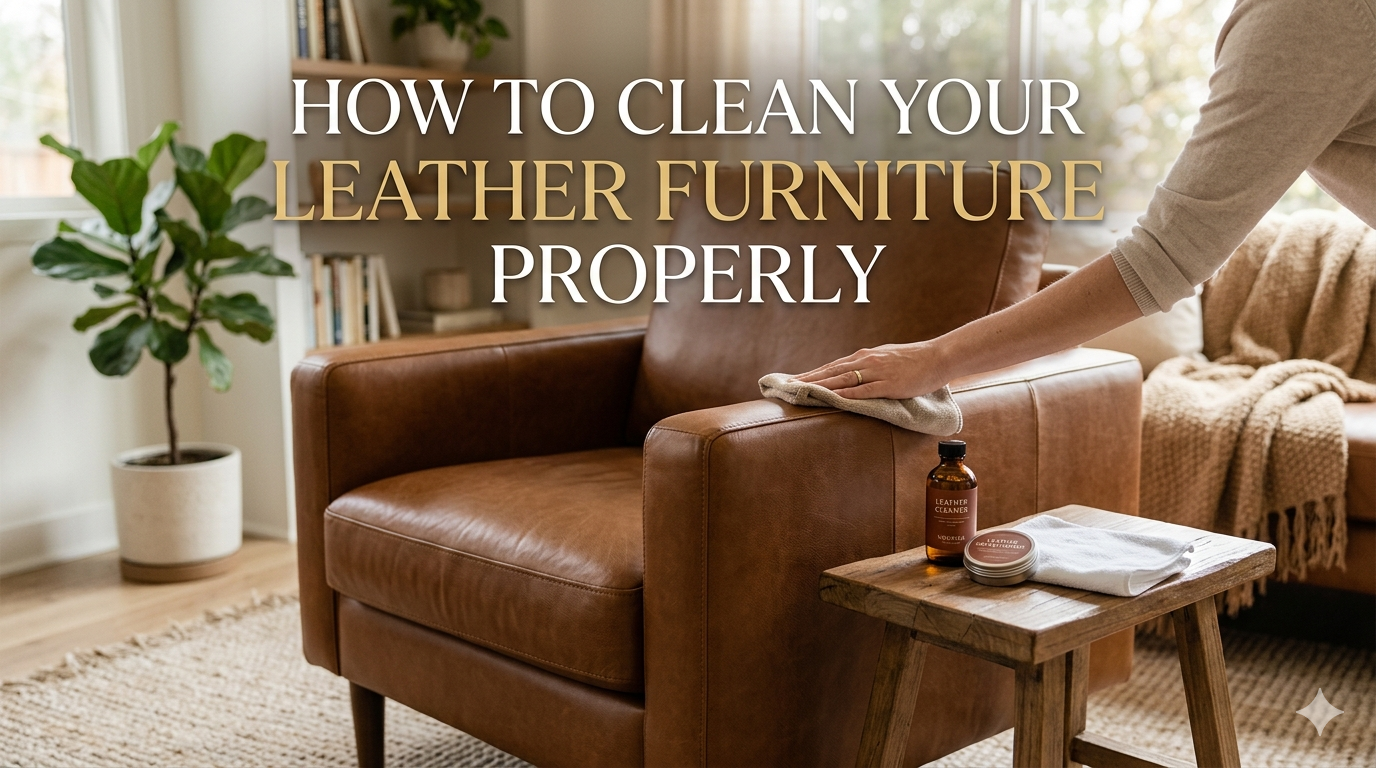

How to Clean Leather Furniture Properly: The Complete Step-by-Step Guide
Learning how to clean leather furniture properly is one of the best investments you can make in your home. Leather is durable, elegant, and long-lasting — but only when cared for correctly. Whether you have a cream sofa, a dark chesterfield, or a recliner, this complete guide covers everything you need: the best products, safe DIY methods, stain removal techniques, and how to clean leather furniture at home without causing damage.
Know Your Leather Type Before You Begin Cleaning
Before you figure out what to clean leather furniture with, you need to know what type of leather you're dealing with. Using the wrong method on the wrong leather can cause permanent damage — fading, cracking, or staining.
| Leather Type | How to Identify | Water Tolerance | Cleaning Safety |
|---|---|---|---|
| Full-Grain / Aniline | Natural markings, absorbs water quickly | Low | Caution |
| Semi-Aniline | Slight sheen, minimal markings | Medium | Safe |
| Protected / Pigmented | Uniform color, resists spills | High | Safe |
| Nubuck / Suede | Velvety, matte texture | Very Low | Special Care |
| Bonded / Faux Leather | Uniform, synthetic feel | High | Safe |
What Do You Need to Clean Leather Furniture?
Before diving into how do you clean leather furniture, gather the right tools. Having everything on hand makes the process smooth and prevents you from grabbing something harmful mid-task.
- ✅ Soft microfiber cloths (2–3 clean ones)
- ✅ Vacuum with a soft-bristle brush attachment
- ✅ Mild dish soap (a few drops, fragrance-free)
- ✅ Distilled water (tap water can leave mineral deposits)
- ✅ White vinegar (diluted — useful for certain stains)
- ✅ Leather conditioner (essential after any cleaning)
- ✅ Baking soda (for grease absorption)
- ✅ Rubbing alcohol (for ink only, used sparingly)
- ✅ Dedicated leather cleaner (optional but ideal for deep cleaning)
How to Clean Leather Furniture Properly: Step-by-Step
This is the core method — the best way to clean leather furniture that works for most finished and semi-aniline leathers. Follow each step carefully for safe, effective results.
Vacuum Thoroughly
Use a soft-brush vacuum attachment to remove dust, crumbs, pet hair, and debris from all seams, crevices, and cushion gaps. Skipping this step means you'll rub grit into the leather when wiping, causing fine scratches.
Mix Your Cleaning Solution
Combine a few drops of mild dish soap with 1 cup of distilled warm water. Stir gently — you want a slightly sudsy solution, not a lather. Alternatively, use a dedicated leather cleaning product.
Dampen (Don't Soak) Your Cloth
Wring out your microfiber cloth until it is barely damp. Leather and excess water are not friends — soaking can cause swelling, water spots, and deterioration of the fiber structure.
Wipe in Circular Sections
Work in small sections, wiping gently with light circular motions. Work top-to-bottom and side-to-side so you don't miss any area. Flip or rinse your cloth frequently to avoid redistributing dirt.
Rinse With a Clean Damp Cloth
Follow up with a second microfiber cloth dampened with plain distilled water to remove any soap residue. Leftover soap can attract more dirt over time and dull the surface.
Dry and Air Out
Blot gently with a dry cloth, then allow the furniture to air dry naturally at room temperature. Keep it away from direct sunlight, radiators, and air vents, which can cause cracking as the leather dries too quickly.
Condition the Leather
Once fully dry, apply a quality leather conditioner with a soft cloth. Work it in using circular motions, let it absorb for 10–15 minutes, then buff away any excess. Conditioning is the step most people skip — and it's the most important for longevity.
How to Clean Leather Furniture DIY: Home Remedies That Work
If you're wondering how to clean leather furniture at home without spending money on specialty products, you're in luck. Several common household items can safely clean leather when used properly. Here's what actually works and how to use them.
1. Dish Soap and Warm Water (Most Versatile)
A few drops of mild, fragrance-free dish soap in warm distilled water is the go-to DIY leather furniture cleaner. It cuts through body oils and light surface grime without stripping the leather's finish. Use a barely-damp cloth and never allow water to pool.
2. Baby Wipes (Quick Wipe-Down)
Alcohol-free, unscented baby wipes are safe for a quick refresh on protected leather. They're gentle enough for regular use between deep cleans. This is one of the easiest answers to what can I use to clean leather furniture when you need something fast.
3. Rubbing Alcohol (Ink Stains Only)
For ink marks, dab a small amount of rubbing alcohol on a cotton swab and gently lift the stain. Don't rub — blot and work from the outside of the stain inward. Follow immediately with a conditioner, as alcohol is drying.
4. Baking Soda (Grease & Oil Absorption)
Sprinkle baking soda on a fresh grease or oil stain, let it sit for 3–4 hours (or overnight), then brush away gently with a soft cloth. This pulls the oil out of the pores before it sets. Do not rub baking soda in — it can be mildly abrasive.
5. Olive Oil + White Vinegar (Light Cleaning & Conditioning)
A popular how to clean leather furniture diy recipe mixes 1 part white vinegar with 2 parts olive oil. The vinegar cleans while the olive oil conditions. Apply sparingly with a soft cloth and buff well. Best suited for finished leathers only — avoid on aniline or suede.
How to Clean Leather Furniture With Vinegar: The Right Way
White vinegar is one of the most-searched home remedies for leather — and for good reason. It's mildly acidic, which helps cut through body oils, light mildew, and odors. Here's the safe method for how to clean leather furniture with vinegar:
- Mix the solution: Combine equal parts white vinegar and distilled water in a small bowl.
- Apply to cloth, not leather: Never spray vinegar directly on the surface — this concentrates it and can strip the finish.
- Wipe in small sections: Use light, circular motions and dry each section as you go.
- Neutralize if needed: If any vinegar scent lingers, wipe down with plain distilled water.
- Condition immediately after: Vinegar is slightly drying. Always follow up with a conditioner.
Best Products to Clean Leather Furniture
While DIY solutions work well for routine maintenance, the best products to clean leather furniture are purpose-formulated to clean without damaging the hide. Here are the top categories and what to look for:
Leather Honey Leather Cleaner
Concentrated, non-toxic formula that works on all finished leather types. Dilute with water for light cleaning or use full-strength on tough grime. Trusted by upholstery professionals.
Chemical Guys Leather Cleaner
pH-balanced, foaming formula that safely lifts dirt without drying. Pairs well with their leather conditioner for a complete care system.
Weiman Leather Cleaner & Conditioner
A 2-in-1 option great for regular maintenance. Cleans light soiling and adds a protective conditioner in one step. Budget-friendly and widely available.
Leather Nova Conditioner & Cleaner
Made with natural ingredients, free from harsh chemicals. A good choice if you prefer eco-friendly products or have children and pets in the home.
When choosing what do you clean leather furniture with, always check that the product is pH-neutral (around 4–6), fragrance-free or lightly scented, and compatible with your leather type.
How to Clean Leather Furniture Stains: By Stain Type
Stains are the number-one reason people panic about leather furniture. The good news: most common stains can be removed effectively if you act quickly and use the right technique. Here's how to handle the most common types.
| Stain Type | Best Method | Key Rule |
|---|---|---|
| Food & Drink | Blot immediately, then clean with mild soap + water | Blot — never rub |
| Grease / Oil | Cover with baking soda for 4+ hours, then brush away | Act before it sets |
| Ink | Dab with rubbing alcohol on a cotton swab | Work from outside inward |
| Mould / Mildew | Wipe with diluted rubbing alcohol; dry fully; condition | Improve room ventilation |
| Water Spots | Dampen the whole panel evenly and let dry naturally | Don't spot-treat water spots |
| Pet Stains / Urine | Enzyme cleaner designed for leather; blot, don't rub | Avoid water-based cleaners alone |
| Dye Transfer (Jeans) | Leather cleaner + isopropyl wipe; may need professional help | Act the same day |
| Scratches | Rub gently with a finger (body heat and oils can minimize minor scratches) | Use leather repair kit for deep scratches |
How to Deep Clean Leather Furniture
A standard wipe-down removes surface dust and light grime, but every 3–6 months your leather furniture benefits from a proper deep clean. Here's how to deep clean leather furniture safely and thoroughly:
What's Different in a Deep Clean?
A deep clean targets built-up body oils, ingrained dust in the grain, faded areas, and odor. It typically involves a dedicated leather cleaner (rather than just soap and water), a soft-bristle brush for working into the grain, and a more thorough conditioning treatment afterward.
- Disassemble what you can. Remove cushion covers if detachable; clean underneath and inside seams.
- Vacuum every inch. Pay close attention to the base of backstitching and panel seams where dust packs in.
- Apply a dedicated leather cleaner. Work it into the surface with a soft cloth using circular motions, section by section. For stubborn grime, use a soft-bristled toothbrush on the grain.
- Wipe clean thoroughly. Use fresh damp cloths to remove all product residue.
- Address any stains. Treat individual stains using the stain-specific methods above.
- Allow to dry completely. This can take 2–4 hours. Never rush with heat.
- Apply a generous conditioning treatment. Use more conditioner than you would for a routine clean, working it into every panel. For very dry leather, consider doing two rounds of conditioning.
- Buff and inspect. Buff away excess conditioner and inspect the piece in good lighting for any areas you may have missed.
What NOT to Use When Cleaning Leather Furniture
Knowing what can you use to clean leather furniture is only half the story. Equally important is knowing what you should never use — regardless of what you've read elsewhere or what worked on something else.
| Product / Method | Why It's Harmful |
|---|---|
| Baby oil / Coconut oil | Clogs leather pores, attracts dust, can go rancid and discolor |
| Bleach or ammonia-based cleaners | Strips dye and protective finish; causes irreversible discoloration |
| Acetone / Nail polish remover | Dissolves the leather's surface coating; permanent damage |
| Harsh detergents / Laundry soap | Too alkaline; strips natural oils and dries the leather |
| Paper towels / Rough cloths | Abrasive fibers cause micro-scratches over time |
| Hair dryer / Direct heat drying | Causes shrinkage, cracking, and delamination |
| Saddle soap (for furniture) | Too alkaline for most furniture leather; designed for thicker harness leather |
| All-purpose cleaners | Unknown pH; not formulated for leather's protein structure |
Ongoing Maintenance: How to Keep Leather Furniture Clean Long-Term
The best thing to clean leather furniture is actually a consistent routine — preventing heavy build-up is far easier than removing it. Here's the maintenance schedule that professionals recommend:
| Frequency | Task |
|---|---|
| Weekly | Dust with a dry microfiber cloth; vacuum crevices |
| Monthly | Light wipe-down with damp cloth; check for any new stains or dry patches |
| Every 3–4 months | Full clean with leather cleaner; treat any stains |
| Every 6 months | Deep clean + thorough conditioning treatment |
| Annually | Inspect for cracking, fading, or wear; consider professional restoration if needed |
Preventative Care Tips
- Keep leather furniture away from direct sunlight and heat vents — UV and heat are the primary causes of drying and fading.
- Use leather protector spray after each cleaning to create a barrier against spills and stains.
- Rotate cushions regularly to ensure even wear.
- Keep pets' nails trimmed and consider a throw blanket on their favorite spot.
- Never sit on leather in wet clothing — the moisture can stain and weaken the hide.
- Keep the room humidity between 40–55% — too dry causes cracking; too humid encourages mold.
🔑 Key Takeaways: How to Clean Leather Furniture Properly
- Always identify your leather type before cleaning — aniline and nubuck need special care.
- Use mild soap + distilled water, or a dedicated pH-neutral leather cleaner.
- Never soak the leather — use a barely-damp cloth at all times.
- Diluted white vinegar works on finished leather, but always follow with conditioner.
- Act fast on stains — blot, don't rub, and always work from outside inward.
- Deep clean every 3–6 months; condition every 6 months minimum.
- Avoid bleach, acetone, coconut oil, and all-purpose cleaners entirely.
- Keep leather out of direct sunlight and away from heat sources.
Frequently Asked Questions
Here are answers to the most common questions about how to clean leather furniture safely and effectively:
You can clean leather furniture at home using a mild dish soap mixed with distilled water, white vinegar diluted with equal parts water, or a dedicated leather cleaner. Always apply with a soft microfiber cloth, test in a hidden area first, and avoid soaking the leather.
The best products to clean leather furniture include purpose-formulated leather cleaners like Leather Honey, Weiman Leather Cleaner & Conditioner, and Chemical Guys Leather Cleaner. These are pH-balanced and safe for most finished leather types. For a DIY option, mild dish soap and distilled warm water is a reliable choice.
Mix equal parts white vinegar and distilled water. Apply to a microfiber cloth (never directly to the leather), wipe down the surface in circular sections, then dry and condition. Avoid using vinegar on aniline, nubuck, or suede leather as it can cause darkening or damage.
For grease stains, apply baking soda and let it sit overnight. For ink, dab rubbing alcohol with a cotton swab. For food and drink, blot immediately and follow with a mild soap solution. For water spots, dampen the entire panel evenly and allow to air dry. Always blot — never rub — and condition after treatment.
Dust weekly and do a light wipe-down monthly. Deep clean every 3–4 months and condition the leather at least every 6 months. If the furniture receives heavy daily use (like a family sofa), increase conditioning to every 3–4 months.
Routine cleaning is safe to do at home if you use the right products and follow the correct method. However, professional cleaning is worth considering for severe stains, mold infestations, heavily cracked leather, or antique and specialty leather pieces where DIY risks are higher.
Never use bleach, ammonia-based cleaners, acetone, nail polish remover, baby oil, coconut oil, saddle soap (on furniture leather), paper towels, or harsh household detergents. Also avoid drying leather with a hair dryer or leaving it in direct sunlight to dry — these cause cracking and discoloration.
Final Thoughts on How to Clean Leather Furniture Properly
Knowing how to clean leather furniture properly isn't complicated — but it does require using the right products, the right techniques, and a little consistency. Whether you prefer a dedicated leather cleaner or a simple how to clean leather furniture diy approach with vinegar and soap, the fundamentals remain the same: vacuum first, clean gently, never over-wet, and always condition afterward.
If you make leather care a regular habit — a quick wipe here, a conditioning session there — your sofa, armchair, or recliner will reward you with decades of supple, beautiful use. The best way to clean leather furniture is, ultimately, the one you actually do regularly.
Bookmark this guide, share it with anyone who's just invested in new leather furniture, and revisit the stain section the next time something spills — because it will. Good luck!